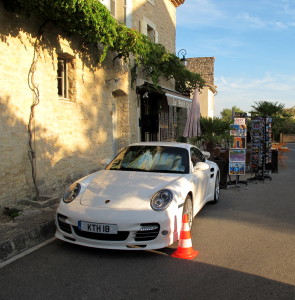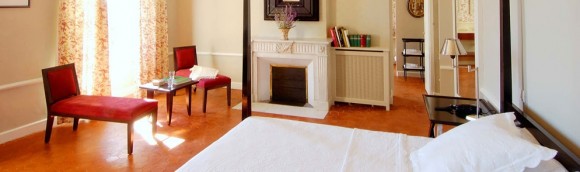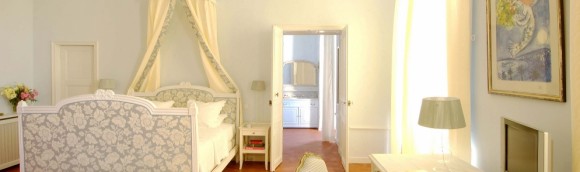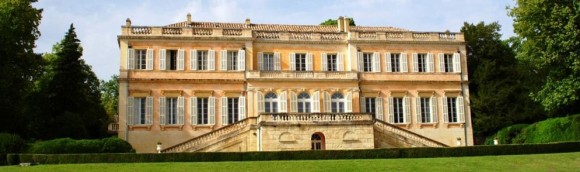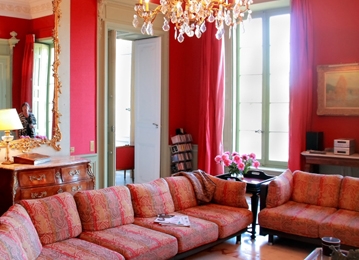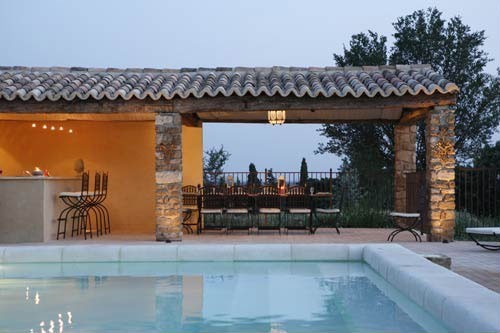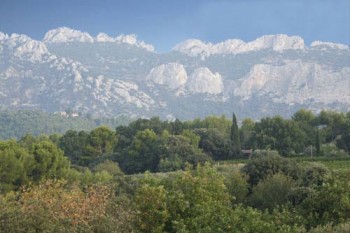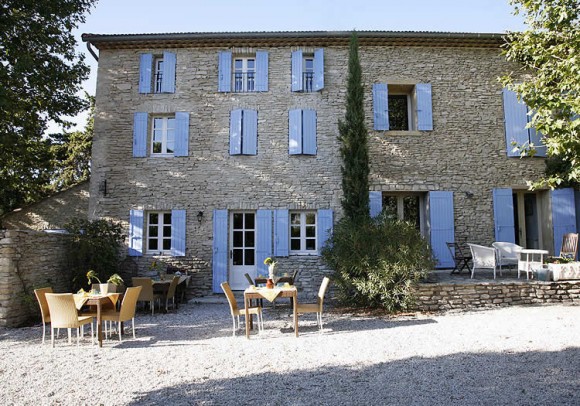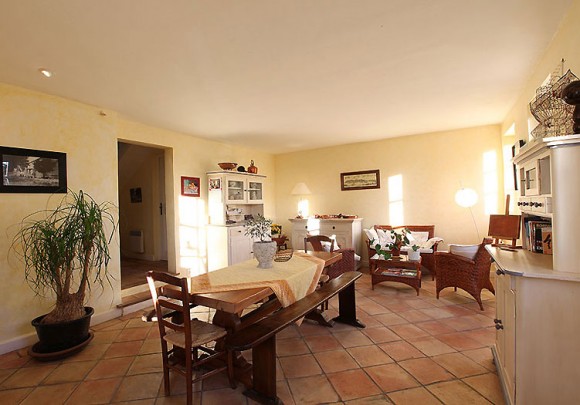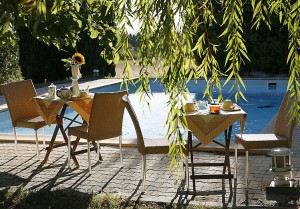
Jazz will be accompany the dreamy light of the Domaine de Capelongue and the heavenly cuisine of Edouard Loubet on March 16 and 17 in Bonnieux

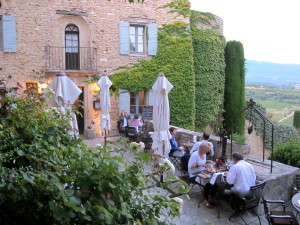
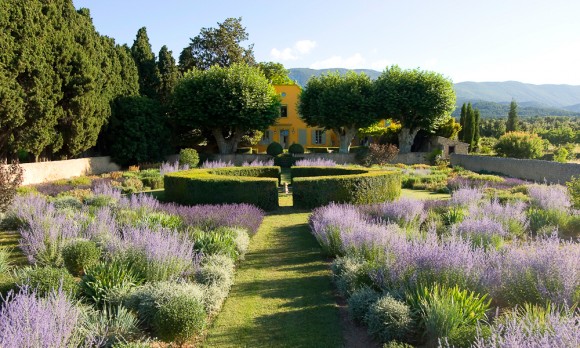
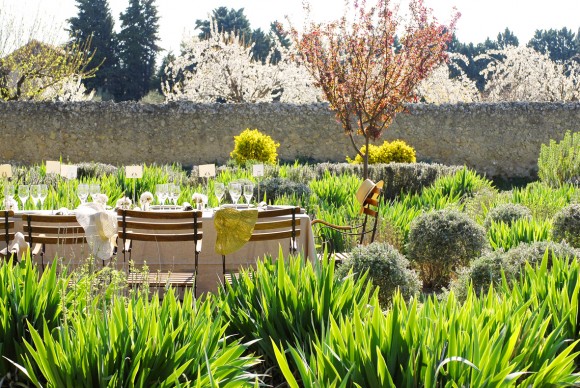
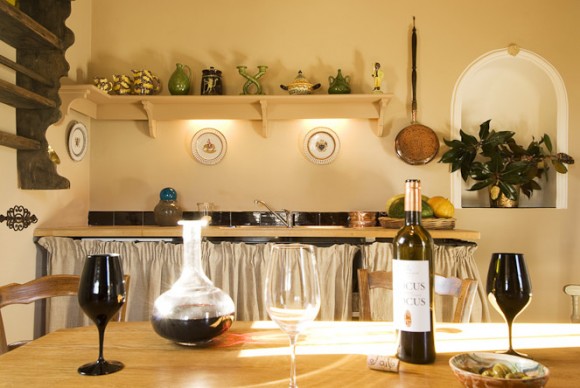
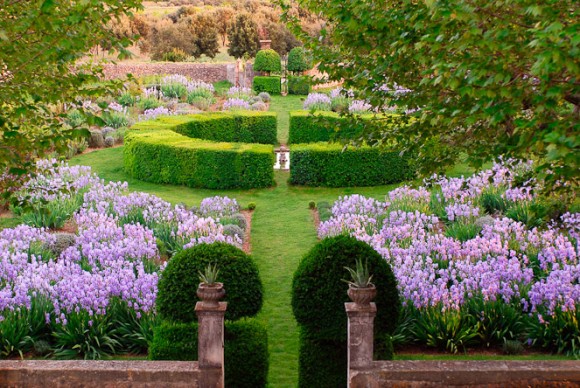
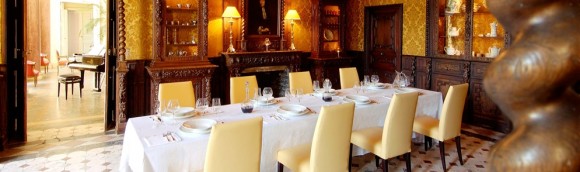
Those who hold the firm conviction that spring is a romantic matter will be drifting to the Domaine de Capelongue this weekend where the feeling of romance never loses its fascination.  As a respite from the stodgy tradition of heralding in spring with a Gin and Tonic (or two or three), they will surrender themselves to the culinary imagination of “Chef of the Year 2011″ Edouard Loubet. A champagne  apéritif at sunset and jazz animate the evening.

What a better way to prep yourself for an exquisite evening at the Domaine de Capelongue this weekend than by listening to the composition of Rogers and Hammerstein for the Broadway production “State Fair” performed by Blossom Dearie in French: “It Might as Well Be Spring.”

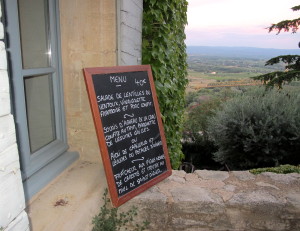
Menus for Friday and Saturday are below; to translate them would be treason.

Friday, March 16

Champagne apéritif at sunset and Jazz Trio; Edouard Loubet will present the Gastronomic Menu:
Ragoût d’Escargots
Au Tabac d’Herbes du Luberon

Financier d’Asperge à la Noisette
Œuf de Caille Magique
Jus Praliné aux Noisettes & Arquebuse

La Pause Provençale Selon Edouard Loubet

Onglet de Bœuf “Black Angus“
Racine de Panais Rôtie de ses Sucs,
Echalote Confite au Genièvre
Jus de Cuisson au Gland de Chêne Torréfié

Marbrier de Goult Truffé par Nos Soins
Barbabou de Pierrouret
Huile de Truffe de mon Ami Louis

Soupe Glacée de Chocolat Amer
Œuf à la Neige à la Chartreuse
Crème Glacée à la Tanaisie du Jardin

Truffe de Jazz, Comme un Jivara
Son Anglaise Recuite au Thym
Crumble de Truffe

Mignardises de Notre Pâtissier

91 € per person


Are some tastes so riveted in memory that you can not conceive of your childhood without them? Your first Mars Bar perhaps. Mr. Loubet’s food memory of youth is his grandmother’s gratin which accompanies a rack of lamb

Saturday, March 17

Champagne apéritif at sunset, Jazz Trio accompanied by singer, Edouard Loubet will present the Gastronomic Menu:

Moule comme une Marinière
Jus à la Coriandre, Chips de Céleri et Pied de Céleri Braisé

Asperge Blanche du Château Luc
Des Nombrils de Vénus
Un Jus Mousseux à la Racine de Réglisse

Daurade Royale Poêlée & Grillée
Asperge du Pauvre au Jus de Cardon
Haricot Noir Piquant Comme un Chili

La Pause Provençale Selon Edouard Loubet

Pigeon des Alpilles
Saisi au Petit Lait de Roquette du Ventoux
Le Gratin de Ma Grand-mère

Marbrier de Goult Truffé par Nos Soins
Barbabou de Pierrouret
Huile de Truffe de mon Ami Louis

Agrumes du Comté de Nice
Granité de Pamplemousse
Crème Glacée à l’Eucalyptus

Croquant Coulant de Chocolat Amer, Sa Tuile au Cacao
Crème Allégée au Diamant Noir & Noisette Grillée
Anglaise Pralinée Corsée au Café

Mignardises de Notre Pâtissier

121 € per person

Basics:

Domaine de Capelongue, Maisons Edouard Loubet, Bonnieux en Provence, Tel 04 90 75 89 78, website

Reservation: Tel : 04.90.75.89.78, Email: reservation@capelongue.com, Jazz and Gastronomic Soiree

Directions: From Cavaillon or Avignon, traverse the village of Bonnieux direction Lourmarin. The Domaine de Capelongue is on the hillside to your left exiting the village. Signage is well-placed.

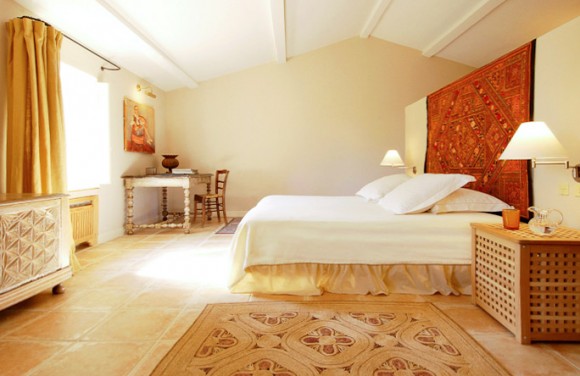
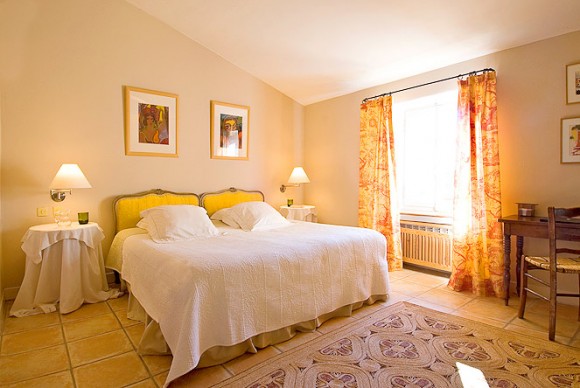
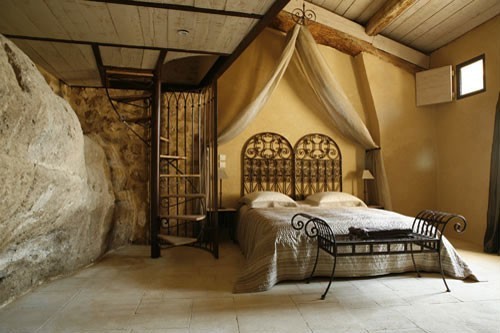
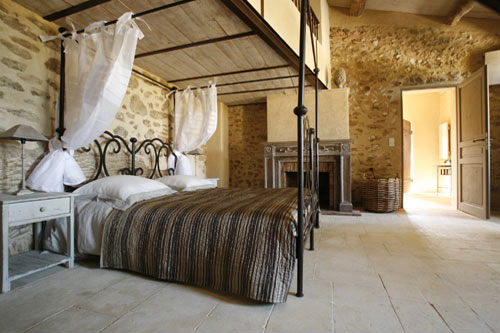
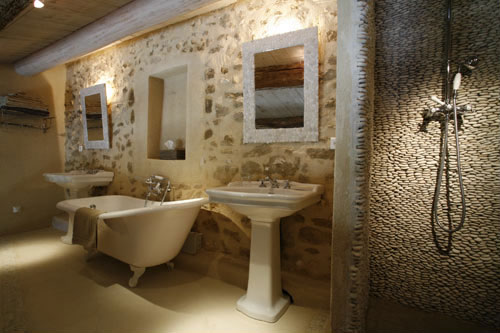
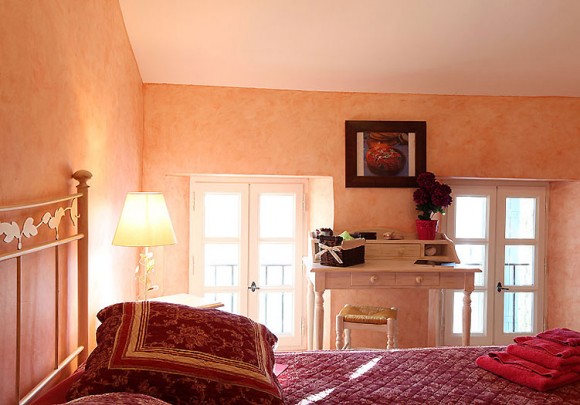
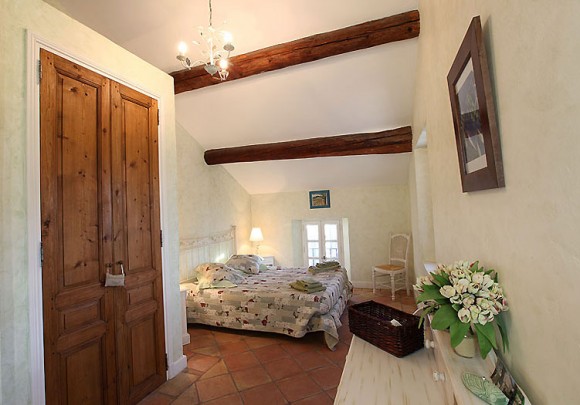
Accommodations: One night at the Domaine de Capelongue with continental breakfast, dinner, jazz, champagne apéritif for 235 € per person in a “Charm” room, or 285 € per person in a Superior and Luxe room; Two nights at the Domaine de Capelongue (2nd night less 50%) with continental breakfast, dinner, jazz, champagne apéritif for 275 € per person for a “Charm” room and 355 € per person for a “Superior” room.


{ 1 comment }

The late edgy wit and bon vivant Christopher Hitchens quipped that one of the most deplorable phrases to grate his ears was “White or Red?” As a quaffer of gargantuan quantities of red, Hitchens would have been at peace in Gigondas where that question is never posed: the appellation produces no white wine. Oddly, this basic trait of Gigondas gets no attention in a recent New York Times piece expounding on a “panel tasting” of Gigondas vintages. Then again, perhaps not oddly at all, considering the numerous lacunae that strike the eye at first glance.

Bylined by Eric Asimov, the article launches into a debunking of grenache – the grape variety predominate in the wines of the Southern Rhone – opining that grenache wines, even expensive ones mind you, may lose their potency and freshness of fruit by the second glass, or that the natural high alcohol levels may render grenache wines “jammy” (cloying concentrated fruit) and “sweet,” cautioning readers in a minatory bark that the ‘fatigue factor’ may menace grenache wines.

How these phrases must niggle the founders of the Grenache Symposium, a marketing initiative launched in June, 2010, to burnish the image of grenache and raise its brand awareness to the level of varietals like Cabernet, Merlot, Zinfandel, and Pinot Noir. Note: grenache is rarely vinified as a varietal; blended with Syrah to enhance structure, or Mourdevre to heighten aromas and flavors, the grape variety is identified on the back label.

Grenache at Harvest Time

Unless a grape variety is associated with a specific region (a terroir),  such generic musings are vacuous and cutesy, not allowing the wine drinker to form rational expectations of the taste of a particular grenache-based vintage as the grape variety, the world’s most widely-planted, embraces an oceanic range in quality from great estate bottles to thin California jug wines.  Yet this critique of grenache has dubious relevance to Gigondas, which ranks among the AOC’s producing in terms of quality, structure and complexity the world’s greatest grenache-based blends.

Unspoken and neglected are the heritage of Gigondas, its unique setting, the character of its wines (percentage of varieties), the styles of winemaking, and most egregiously its various terroirs.

Brace yourself for a strange and curious proposition. Asimov rhapsodizes over a 2008 Domaine du Cayron, the only wine on the page which moved him to invoke lush clichés, and while not in the tasting line-up, gets an Oscar as his benchmark for a good as it gets Gigondas. Whereas one cannot dispute his pleasure, employing a 2008 cuvée as a soi-disant benchmark would alarm local winemakers as that summer was rain-lashed and cool, placing the 2008 vintage as the second worst in the past decade.

Backstory: When Robert Parker of the Wine Advocate embarked to the Southern Rhone to taste the 2008 cuvées, many producers inveighed the wine world pasha to bypass tasting their 2008’s as the bottles were not all that good. In the tasting notes for Gigondas in the Wine Advocate, one recognizes numerous wineries with scores for 2007 and 09 but not for 2008, including the Domaine du Cayron which turns out a “consumer-friendly” style of wine ACTO Parker.

For Asimov this infatuation portends that a ‘07, ‘09, and ‘10 Domaine du Cayron, and most every other cuvée produced in the AOC for these years, will dismantle his palate with more intense fruit, higher alcohol and firmer tannins, risking what he deplores: over-the-topness. In tennis terms, think of grenache-based blends as PBers – the unrelenting powerful and aggressive strokes of a power baseline game (include massive Syrahs on this side of the net) – compared to other red grape varieties that offer the finesse of a serve-and-volley game.

More dispiriting is the manner of the panel in branding Gigondas as a wine inferior to Châteauneuf-du-Pape (CDP), eight graphs of copy mind you, in restating the obvious. Any wine consumer grasps this as a received idea, and if he does not know by taste, he will by price: the label-inflated CDP’s set you back on average more than double for Gigondas. It was almost as if the panel was prepping for a comparative tasting of the two AOCs. When Asimov laments that even his favorite Gigondas, “sadly,” lacks the “extra dimension” of a CDP, one can imagine the acquiescing donkey nods around the tasting table.

To really nail this point home, panelist Pascaline Lepeltier, wine director of Rouge Tomate in NYC, spins out this beauty: “There’s a tiny world between Côtes du Rhone and Gigondas, and a big gulf between Gigondas and Châteauneuf.” At first glance, this sentiment is hugely meaningless; on reflection, it is highly dubious. Consider this: Châteauneuf-du-Pape (CDP) the AOC is more than twice the surface size of Gigondas, and within CDP there is a marked variance between the good wines (86-89 rated) and the great ones (95-98). Match up an exceptional Gigondas against a good CDP, and the gulf is a gully, but compare that exceptional Gigondas to a pale plonkish Côtes du Rhone produced by a cooperative and sold in a bag-in-box and the gulf transforms into abyss. So goes the glib prattle of self-regarding NYC sommeliers pandering to the snobbish tastes of well-heeled clients willing to pop for a bottle of CDP at $150, or more.

You now find yourself in the eerie territory of the tasting panel – what the wine scribe Matt Kramer calls “group grope,” the dumbing down of taste by committee where keen individual judgment gives way to the “mediocrity median”: the least offensive and safest wines get the nod. Wines of a unique character and style are pushed aside in deference to the group. Just run a finger over the panel’s tasting notes to count the repetitive churlish descriptions (see below): the point is made.

More affecting would be a format pairing off two wine experts going at the wine, and at each other, to ferment sharp and colorful exchanges. Dueling palates.

In noting that Gigondas “rarely rises to the level of the exalted” (CDP), Asimov confesses that he ‘especially values everyday wines.”  If wines are either exalted or everyday, good taste belongs only to the 1%-ers. In the continuing effort to gain a grasp how to classify wines, one can first be disencumbered of the overused and banalized New World / Old World, and consider this neat assortment: connoisseur and consumer. The former are high quality wines, which may require cellaring for a few years or many, whereas the latter vary in quality and are opened soon or within a few years of being released. (Note: in a few years, 90% of consumer wines will have screw caps.) In the Southern Rhone, CDP, Gigondas and its neighboring AOC Vacqueyras all qualify as luminous connoisseur wines.

Without any mention of the variances among three of the four vintages (‘07 to ’10) evaluated, the panel choose ten wines – from twenty tasted – ranking them by one to four stars, with anemic tasting notes attached to each bottle: not one word of any wine’s color in the glass; only a single vague reference to the nose / perfume of one wine, and although ‘fruit’ is employed in nearly every description, not once is there an attempt to animate this flavor ‘en bouche’ (suggestions: blackberry, cassis, raspberry, plum, kirsch, red currants, cherry and blueberries), and no percentages given of various varieties in a cuvée. It’s lazily-crafted amateurish stuff, a lurid lapse in sensory skills. Chalk it up to group think.

Gigondas Primer

Location: Gigondas the village and its eponymous AOC are located in the Upper Vaucluse, 10 miles east of Orange, 12 miles northeast of Chateauneuf-du-Pape, and 18 miles northeast of Avignon.

AOC: Created in 1971. 3000 acres. About 75 estate-bottled wines and more than 150 growers. Vines planted in the Gigondas in Roman times. Vineyards take their name from a lieu-dit, the smallest piece of land which has a vineyard assigned to it, yet a vineyard may own other lieu-dits in the appellation, and the name of the lieu-dit may appear on the label, or wines from more than one may be combined.

Terroir: The terroir has three distinct areas: the alluvial topsoil of gravel and clay on the plains declining to 450 feet, from the village of Gigondas (820 feet), a cone-shaped area just above the village of clay, limestone and sand, and the sandy limestone soil on the verdant slopes where vines populate terraces up to 1300 feet, under the gaze of the majestic Dentelles de Montmirail, jagged, limestone peaks. The clay soils of the plains and the cone (called the Font des Papes), which are both more resistant to drought, produce deep purple wines, of powerful fruit and alcohol with spicy and herbal perfumes, whereas the limestone slopes bring forth vintages of deep red fruit, firm tannins with a nose of garrigue and lavender and a strong minerality.

Winemaking: Lowest annual yield in France of 33-36 hecto-litres per hectare. Maceration is typically long, as it is  in CDP, of three to four weeks.  Fermentation in tanks followed by aging in oak barrels.

Vintages: 2005 a super year, good estates still in the cellar, 2006 drink now if on the shelves; 2007 an awesome vintage drinking now or cellar for a few years, develops earlier than the 2005′s; the rain-lashed 2008′s are atypical – thin on intense fruit and low alcohol, choose carefully; 2009 a very good vintage, hotter than 2007 thus less acid; to hold in cellar for another year or up to five depending upon cuvée; 2010 may rival 2007 yet with more aging potential.

Trivia: Kermit Lynch, the American importer who has a wine shop in Emeryville Ca, is co-owner of Les Pallières, a Gigondas vineyard founded 500 years ago.

Basics:

Gigondas: Website, Gigondas, the book

Restaurant l’Oustalet Gigondas: Website

Directions: Gigondas is located east of Orange. From Avignon, take autoroute 7 north, exit E714 at Courthezon, east on D950D Route de Vaison, connecting to D977 to Gigondas. From Carpentras, D7 north to Gigondas


{ 0 comments }

“Pourtant nous avons été ensemble dans le Vaucluse, j’en mettrais ma main au feu. Nous avons fait les vendanges, tiens, chez un nommé Bonnelly, à Roussillon.”
En attendant Godot, Samuel Beckett

In addressing Estragon, Vladimir is channeling the author’s days working in the Bonnelly vineyard near Roussillon where Beckett and his companion Suzanne Deschevaux-Dumesnil had fled to escape arrest from the Germans in Paris to rent a house in the Luberon. Seventy years on and fourth-generation Bonnelly’s run the vineyard, the Domaine de Coulet Rouge, whereas the two-story house, Les Roches Rouges, secluded in an ochre-flecked forest – a ten minute stroll to the village – where Sam and Suzanne stayed for more than two years is now in search of a buyer who appreciates its heritage and the iconic writer’s legacy.

Consider the narrative: When the Germans took over Pairs June 1940, Sam and Suzanne lived at their apartment in the 15th arrondissement. In September 1941, Beckett joined a cell of the French Resistance, Gloria SMH, translating and ordering documents and correspondence. Within a year, the Germans busted the cell, making more than 50 arrests, and Sam and Suzanne, alerted to their impending capture, obtained false papers and made their way across to the unoccupied zone, arriving in Vichy, the headquarters of the French government collaborating with the Germans, in September 29, 1942.

They soon headed south as Professor Lob, friend, had informed the secretary general in Avignon that an Irishman would be residing with his family in Roussillon, a village in the Luberon that was relatively safe from German patrols. Upon walking the final leg of their journey to Roussillon, Sam and Suzanne took a room at the Hotel Escouffier, and subsequently declared their residency at City Hall in Roussillon on Nov. 6, 1942. A week later, Hitler declared the French free zone subject to German rule, making movement even in the south severely restricted. It would not be until July 43 that Beckett, as an Irish citizen, would be granted the right to travel within France.

 Professor Lob put Sam and Suzanne in contact with the owner of a house in an area just outside the village called La Croix. During the first months in Roussillon, Beckett found existence maddening and cramped with an absence of structure. Beckett met the painter Henri Hayden who was to his delight a chess player. (Beckett loved chess as did Marcel Duchamp, who was living in America. Mary Reynolds, the lifelong companion of Duchamp, had given Sam and Suzanne money to escape Paris.) To put bread and wine, quite literally, on the table, Beckett worked for local farmers, one being the Bonnelley cited above. Otherwise, Beckett engaged in therapeutic long walks.

The ochre-splashed hills near the Samuel Beckett House in Roussillon

Now, consider the heritage: Upon adapting to a hermetic rural lifestyle, Beckett set himself to write, working on the novel “Watt,” which reflects the despair of rootlessness and not belonging anywhere, and gives Beckett a platform for taking some highly satirical swipes at Ireland, such as the ban on contraception (alas, a current day contretemps on the America political scene).  In 1944, Becket reunited with the Maquis, the rural French Resistance, by hiding explosives in the house and going on patrols with the local “Maquisards.” At the house in the forest, Beckett overcame a maddening hermetic existence to nourish his artistic fervor as well as his express his ardor for freedom from oppression.

Paris liberated by the Allied forces, Sam and Suzanne left Roussillon by bus to Avignon in April, 1945, and then by train to Paris where they reclaimed their apartment. Writing “Godot” awaits, and the salute Bonnelly and the grape harvest in the Luberon.

Basics

The Samuel Beckett House is a two-story structure on 2.3 acres of land; 1,930sq ft., ground floor of living room with fireplace, dining room, two bedrooms, kitchen with terrace, toilet and laundry, second floor of three bedrooms. Attached garage. House has southern exposure.

Domaine de Coulet Rouge: Website, Roussillon: Website

Contact
Property agent Caron at: Email: caron.maceoin@sothebysrealty.com, or Tel: (33) 625 84 32 79, or 0625 84 32 79 within France. Price listed of 850,000 euros.


{ 0 comments }

The Grenache Symposium, the marketing initiative to burnish the brand image of the noble grape variety, moves its road show of festive G-nights to VINISUD in Montpellier on the evening of Monday, February 20.

VINISUD attracts more than 30,000 visitors worldwide to taste vintages from more than 1,500 exhibitors from the Mediterranean region, which accounts for more than 50% of world wine production. Wines featured are from Spain, Italy, Portugal, Tunisia, Turkey, Morocco, Algeria and France (Languedoc, Roussillon, Provence, the Rhone Valley, Southwest and Corsica.)

Participating G-Night Vignerons: Delubac, La Barroche, Les 3 Cellier, Pares Balta, Guillaume Gros, Clos du Trias, Solitude, Gourt de Mautens, Clos du cailllou, Vinyes Domenech, Lupier, Thunevin-Calvet, Les Clos Perdus, Mourchon, Saladin, Mouriesse Vinum, El Escoce Volanta, Mordoree, Chene Bleu, Prieure de Montezarques, Lafond Roc Epine, Vin Acadie, Clos Figueras, Pegau, Trinquevedelle, Revelette, Richaud, Galuval, Le Clos St Jean, La Celestiere, La Gramiere, La Janasse, Roche, Vindemio

Basics

Place: BAB – fusion food and drinking, Les Marestelles, rte de Palavas (D986), Lattes

Time: 7:00 p.m. with Dancing and Beer at 10:30 p.m.

Reservations: Marlene@grenachesymposium.com

Vinisud: Feb 20, 21, and 22 at Parc des Expositions, Montpellier Website
Websites: www.grenacheday.com, www.grenachesymposium.com

PVB: Grenache, The Noble Rhone Grape

{ 0 comments }

Philippe Gimel, kicking back in his hangar-cum-wine cellar with Californian intern Caitlin Perlman, has switched to Diam closures to eliminate cork tainted wine and other pollutants.

With great anticipation, you uncork a bottle, and at first whiff the wine gives off a musty and moldy scent, or at first sip it displays a foul fusty taste. You may attribute this odd taste of rotten wood or of stuffy fruit to a fault in the winemaking when, in effect, in each instance the wine is “corked” or “bouchonné,” undrinkable. Cork-tainted wine is despair in a bottle: it cheats you out of all evaluation and all pleasure.

Talk to vintners and they will confess, reluctantly at times, that from 1 out of  7 to 1 out of 8 natural corks turn up defects spoiling a good drink. Cork taint is the result of the cork being contaminated with TCA, a chemical compound found in all natural cork, and this pollution migrates to the wine.  Whereas there are processes, such as washing and sterilization, to maintain average TCA levels in high quality natural corks, there exists no technique to rid natural cork closures of TCA. Another defect of natural cork is the uneven or excessive transmission of oxygen that renders wine flat and insipid, or at worse a tart sherry-vinegar taste; in the glass, color is perverted by an orange or brown tinge on the rim edges.  In French, oxidized wine is dubbed “passé.”

Saint Jean du Barroux and its Diam 10 cork closure

For Philippe Gimel, whose Saint Jean du Barroux vintages are achieving cult-like status in more than 10 countries despite the patchy rep of the Ventoux, cork taint dulls his brand image and frustrates his customers’ expectations. At a tasting in 2010 at the Estaminet in Gordes, Philippe cracked open a bottle of his exotic and elegant 2005 red: bouchonné! No more messing with the mind, the palate and the wine — Philippe switched to the taint-free DIAM cork closures, and not just any DIAM mind you, but the top-of-the-line DIAM 10.

It’s a high-tech agglomerated cork: the DIAM process involves boiling harvested cork, then grinding it into granules that are subjected to ” supercritical carbon dioxide” to penetrate and cleanse the cork granules, removing 99.8% of TCA and reducing other harmful pollutants, and then the cork granules are assembled, baked and bound into a neutral cork structure with consistent permeability levels to eliminate the risk of wine oxidation. The DIAM product line varies by the size of closures and their oxygen transmission: the DIAM 2, DIAM 3, DIAM 5 and DIAM 10, with each number denoting the minimum aging potential.

The DIAM 10 of Saint Jean du Barroux and the DIAM 5 of Domaine Rabasse Charavin

The DIAM cork closures are gaining favor among vintners who prefer a classical-shaped taint-free cork with aging potential to the other closures whose use is surging in the wine market: screw caps. Gazing out at the changing wine world landscape, Robert Parker in Food and Wine  forecast that easy-to-open screw caps will claim a majority market share as more and more vintners adopt screw caps for wines that are consumed within two to three years of the vintage, in effect more than 90% of world production.

Frederic David of Les Vignobles David employs screw caps for his Le Moure de L'isle brand of Côtes du Rhône wines, including Kosher Wines, and two other white vintages.

While guaranteeing the absence of  TCA, Stelvin, the quality choice, offers two closure concepts: Saranex™ allowing more oxygen to pass through than Saran™ Tin, designed for red wines and wines to be consumed within 2 – 3 years, and the Saran™ Tin with higher barrier levels allowing less oxygen to pass through, recommended for white wines and wines to be conserved more than 5 years.

Vintners producing red wines with anticipated aging of longer than ten to thirty years, the great estates in the Châteauneuf du Pape, will remain faithful to high quality natural cork.

Perhaps due to tradition and the lack of investing in new technologies (screw capped wine requires a special glass bottle finish known as BVS), the producers in the Southern Rhone may face a significant consumer backlash unless they adopt the screw cap for their early maturing wines and the DIAM closure or another agglomerated cork for their red wines meant to mature for four to ten years in the bottle.

One white wine meriting high-quality cork

Consider a perfect world where all the rosé wines in the Southern Rhone, except for some great Tavels, are sold in screw cap bottles, other than rosé in bag-in-boxes offered at wine cooperatives. Synthetic corks of plastic components are unreliable. Likewise screw caps placed on the Southern Rhone whites that are not for long in the bottle due to the lack of acid. The only white wine produced in the region that merits high quality cork is the stupefying rich varietals (monocépage) of the Domaine le Serre de Condorcet.

Producers of quality red wines in the Côtes du Rhône face a dilemma: for their red wines vinified to mature for more than three and as long as ten years, depending upon the quality of the vintage, do they remain faithful to natural cork, and run the risk of cork-tainted wine and oxidized wine ruining from 10% to 14% of each vintage? Or do they adopt screw caps for their reds that mature young and the DIAM or another agglomerated cork for those vintages of longer maturity?

Traditional closures of 2009 red vintages of L'Oratoire St Martin, Cairanne, Chateau Des Hautes Ribes, Gigondas, and Arnoux et Fils, Vacqueryas

The same concerns confront Inter Rhône, the trade organization of the wine-growing industry in the Côtes du Rhône and the Rhône Valley that handles promotion in France and abroad as well as economic, and technical issues concerning AOC (Appellation d’Origine Controlée) wines: how to calculate the changing wine consumer preferences for cork taint-free wines and achieve a calculus of consent among its members on the appropriate wine bottle closures for rosés, whites and reds.

Other wine regions are forward-thinking in adopting and marketing screw caps and composite corks. In terms of consumer preferences, the future is now. Southern Rhone vintners, known for being stubborn (têtu), have an opportunity to burnish their old world appeal with new world technologies and, in turn, create some marketing buzz. If only it was as easy of developing a new App to download on each bottle!

Basics

The screw cap La Ferme Julien, a Ventoux Vintage, by Perrin et Fils available at Trader Joe's

Diam: Youtube, Website Stelvin Concept: Website

Domaine Saint Jean du Barroux: Facebook, Website

Domaine Rabasse Charavin, Le Font d’Estevenas, Cairanne, Tel: 04 90 30 70 05, email couturier.corrine@wanadoo.fr

Vignobles David: Website

L’Oratoire St Martin: Website

La Ferme Julien: Available at Trader Joe’s, Produced by Perrin et Fils  Website

Chateau Des Hautes Ribes: Website

Arnoux et Fils: Website

Domaine le Serre de Condorcet: Email serredecondorcet@orange.fr


{ 0 comments }

A model of Frank Gehry's design cicrca 2010 for the Parc des Ateliers in Arles for which two out of five building permits are pending approval

Observing French bureaucratic processes is like watching a small pig pass through a Boa constrictor: there is digestion sans any appreciable movement.

When PVB interviewed him last July, the Arles-based iconic photographer Lucien Clergue was bemoaning the bureaucratic deflection of Frank Gehry’s soaring towers of twisted aluminum foam, designed for the Luma Foundation’s ‘Parc des Ateliers’ in Arles. Mr. Clergue is a co-founder of Rencontres Arles, the international photography festival, which will animate the Foundation’s new campus — originally clusters of ateliers for railroad maintenance and repair — during the festival’s annual summer run when it consumes the entire ancient city.

In an unnerving decision last spring, the National Commission for Historical Sites and Monuments rejected two of the five building permits for the cultural center cum public park design because the towers siting over a Roman cemetery could threaten Arles’ Unesco World Heritage classification, as well as their obstruction of views of a medieval church. The French Ministry of Culture concurred and recommended that the towers be repositioned on the site.

The Luma Foundation, created by the Swiss pharmaceutical heiress Maya Hoffman, will occupy the towers, which will also have exhibition space, workshops, a library and restaurant.  When the last delay was announced, a beleaguered Maya Hoffman told Lalettredelaphotographie.com, ”that “twice,” and “without consultation,” public authorities have changed the criteria of the building permit and the area concerned.  In a minatory bark she said, “It goes without saying that this time will be the last.”

A dénouement is in view. In an interview last week in La Provence, the regional newspaper, Hervé Schiavetti, the mayor of Arles, stated that the building permits for the Parc des Ateliers will be approved “now, in effect, in the next few weeks,” adding that the project from now on will assume a “normal evolution” of two to three years of construction.

PVB will update this story once an official announcement is made by French authorities, including revisions in the project design.

Basics

La Provence: “Arles: Une Ambition Nouvelle en 2012,” 11 January 2012

{ 0 comments }

Auberge du Vin, wine school and B&B under the gaze of Mount Ventoux

Who hasn’t experienced pangs of ignorance, confusion, intimidation, or irritation when encountering “wine scores,” the numbers attached to third-party opinions of soi-disant experts, that stare out at you from stickers slapped on wine bins and shelves, or touted by eager sales clerks and self-regarding waiters or sommeliers?

Why not enlarge your knowledge of various wine grape varieties and wine styles as well as your wine tasting skills by concentrating the mind in a well-structured wine course, thus emancipating yourself from the tyranny of what Matt Kramer calls ‘mega validators.’

The Auberge du Vin, located in Mazan, 16 miles northeast of Avignon, offers wine courses ranging from half-day sessions on Rhone Valley wines to WSET (Wine and Spirits Education Trust) multi-level qualifications. With a splendid view of Mont Ventoux across an ocean of vineyards, the Auberge has a converted French farmhouse and a cottage for lodging guests. In the evenings, days are rounded out by visits to local wineries and wine bars / restaurants.

Classroom at the Auberge du Vin Looks Out Onto Vineyards and the Mythical Mount Ventoux

The Auberge du Vin is the home of Linda Field and Christopher Hunt, who welcome guests year round for wine holidays and wine courses. Linda, a WSET-qualified wine teacher, has taught wine courses and judged wine competitions in London. The courses are conducted in a dedicated-classroom setting with views of vineyards and the majestic Mont Ventoux. Couches and a tasting bar make for a convivial atmosphere.

The Wine and Spirits Education Trust is a global organization that promotes high quality education and offers sought after qualifications in wines and spirits. See www.wsetglobal.com. The WSET qualifications are recognized throughout the world. For those who want to hone and refine a basic knowledge of wines, one can begin the WSET ladder at Level 2.

This course is appropriate for wine enthusiasts who want to learn more about how wine is made and the key wines and spirits of the world. A Systematic Approach to Tasting is taught and applied to over forty different wines assessed over the 3 days. The course covers major wine grape varieties, style of wines, and wine label terminology, with a one-hour examination of 50 multiple choice questions on the last day to validate your certification.

The Auberge du Vin is offering the WSET Level 2 course this winter and spring on:

Bar and Lounge Area in the Spacious Classroom of the Auberge du Vin in the Southern Rhone

-  Thursday 23 Feb to Sunday 26 Feb

- Thursday 22 March to Sunday 25 March

- Thursday 9 May to Sunday 13 May

The enrollment fee of 500€ covers 3 days of wine tuition, 3 lunches, all wines, study materials, exam fees, as well as visits to the village of Châteauneuf-du-Pape and a vintner’s wine cellar there.

Accommodations with breakfast are available; for four nights, a shared room is 195€.

Note: Prices given do not include transportation to/from Auberge du Vin, nor evening meals. Both can be provided on request. Your textbook will be sent to you ahead of the course and it is strongly advised to read the book before commencing the course.

Basics

Auberge du Vin, 384 Chemin de la Peryrière, 84380, Mazan, Tel: 04-90-61-62-84, Email: info@aubergeduvin.com, Website


{ 0 comments }

A jewell of a wine bar: Caveau de la Tour de L'Isle

Caveau de la Tour de L’Isle: L’Isle-Sur-la-Sorgue

Stéphane et Janique Fina run this jewel of a wine bar in the center of L’Isle-Sur-La-Sorgue. Walk inside past the cheese counter and the racks of bottles, and you drift back into a cozy room of wooden tables and chairs. A retrograde décor. Pre-great-war. Originally a cheese shop, there are sixty fine cheeses and bread plates to accompany a great selection of wines by the glass or bottle.

The wine menu takes in all of the major wine regions in France, but take notice of the Domaine de la Crillone, a hard-to-find can’t-wait-to-taste AOC Ventoux wine. The Domaine covers only 4 hectares and produces an intense Grenache-dominant red. Tables occupy the sidewalk from spring to summer.

Caveau de la Tour de l’Isle is located in the center of the town at 12 rue de la République, L’Isle-Sur-la-Sorgue, Tel: 04 90 20 70 25, Website Open everyday in July and August; 9:00 a.m. -12:34 p.m. 3:32 p.m. – 7:59 p.m. Closed on Monday in April, May, June and September, closed Monday and Wednesday from October to March.

Le Tourne Au Verre treats wine treated as royalty: every bottle of red is decanted at your table.

Le Tourne au Verre: Cairanne

For wine enthusiasts, the gravitational pull of Cairanne asserts itself in the presence of what many claim is the most outstanding wine bar / restaurant in the Vaucluse: Le Tourne au Verre, where wine is treated as royalty. It’s all about attitude. The service is serious and snappy. Spiffy servers, attired in white tees with a restaurant logo printed on the chest and “Staff” printed across the back, place each bottle of white wine in an ice bag, and each bottle of red is decanted at your table.

Traversing the village toward St. Cecile des Vignes, Le Tourne Au Verre is visible from the street to your right

The 500-bottle-plus wine list has inner depth –  every French wine region is well represented. Wines are available by the glass. The menu choices pair well with either white or red wine, and the cuisine is top-notch fare.

Le Tourne au Verre is situated in the center of the village on the Route de Sainte-Cécile, closed Wednesday and Sunday, Tel 04 90 30 72 18,  Website Directions: Carainne is located northeast of Orange. Take Hwy D976 from Orange to Carnaret-sur-Aigues and then Hwy D93 to Carainne.

{ 0 comments }

An "equilibrium" of Nadine Fourré

As the temps dip in the nervous late afternoon light of the Luberon, Pascal Lainé will be warming his gallery guests with a “vin chaud” apéritif during three evenings next week of the year-end show “Artists of the Gallery.”  His dynamic Ménerbes gallery is a purveyor of smart art to the smart set.

The winter season apéritifs will be served on Tuesday through Thursday, Dec. 27-29, from 4:00 p.m. to 6:30 p.m. The group show runs until Wednesday, January 4.

“Vin chaud,” known as mulled wine or hot spicy wine,  is usually red wine served warm with spices, a bit of fruit (usually orange or apple), and for the naughty, may we wish, a drizzle of cognac.

The multicolors of Michel Loeb


The “Artists of the Gallery” show features the works of:

MICHÈLE BELAICHE – JEAN DEGOTTEX

JEAN DEYROLLE – KIKI DESAILLY

NADINE FOURRÉ – MARINE GUILLEMOT

NOEL LA VISTA – MICHEL LOEB

MARIO PRASSINOS – MARINE DI STALLI

HANS STEFFENS – VICTOR VASARELY


Basics:

A guilloché painting by Michèle Belaiche

The “Artists of the Gallery Show” runs until 4 January.  Gallery 0pen Tuesday to Sunday from 11:00 a.m. to 1:00 p.m. and 3:00 p.m. to 6:30 p.m.

Galerie Pascal Lainé, Rue Sainte Barbe in the center of Ménerbes. Tel: 04-90-72-48-30, Website


{ 2 comments }

Lady in "Wine in Love" Tee Serving Ogiers Clos de l'Oratoire des Papes at Grenache Night ; photo via Auberge du Vin

Grenache Night at the Grenier a Sel in Avignon last month, organized by the Grenache Symposium whose goal is for Grenache  to share the same mindshare as Chardonnay and Cabernet Sauvignon, began slowly as vignerons drifted to made their stands gradually. At 7:30 p.m., there were only five in place, by 8:15 p.m. all the stands were full, and at 8:30 p.m. G-Night was heaving.

Among  Grenache-based vintages offered this evening, here are three recommended from the tastings notes of Linda Field of the Auberge du Vin:
 

Domaine du Pegau

Owned by Paul Féraud and his daughter Laurence, this top estate covers 17 hecates of red grape varieties and 1 hectare of white grapes.

Châteauneuf du Pape Cuvée Réservée 2009:
75% Grenache, 20% Syrah and 5% Mourvèdre, Counoise and other varieties. Spicy aromas of crème de cassis, toasted herbs, pepper and roasted meat on the nose. Big, rich and full-bodied on the palate, with a long, lingering finish.

Châteauneuf du Pape Cuvée Laurence 2009:
Same blend wine as the Cuvée Réservée but is kept in wooden cask for another 18-24 months before being bottled. Crème de cassis, exotic spices and tobacco and leather aromas on the nose. Medium to full-bodied on the palate, with a long, lingering finish.

Ogiers Cave des Papes:

Established as a wine merchant in 1859, Ogiers has been a leading ‘negociant’ in Châteauneuf du Pape.  In 2000, Ogiers began to offer its own estate-produced wines from the Clos de l’Oratoire des Papes.

The 2009 Ogiers Clos de l’Oratoire des Papes is a dense, full-bodied drink, a blend of Grenache, Syrah, Cinsault and Mourvèdre. A woody nose, black currant and spicy fruit on the palate, nicely structured with a smooth rich finish. A good price / quality buy.

Prieuré de Montézargues, Tavel Rosé

Taking it name from buildings that formed a small monastery from 12th century, the vineyard produces an outstanding single vintage of Tavel Rosé. Since 2003, Guillaume Dugas, the son of Alain Dugas who was the director of wine at  Chateau la Nerthe in Châteauneuf du Pape. The domaine covers 34 hectares and produces 160.000 bottles of Tavel per year.

Guillaume’s 2010 is a  richly-colored full-bodied rosé, a blend of 55% Grenache, 30% Cinsault and Clairette. This exquisite wine has a red currant color, a nose of bright cherries and raspberries, a tangy texture and a clean finish.  Tavel rosés are pricey. Some disappoint. Not so the Tavel of Prieuré de Montézargues. It delivers value and great pleasure. (See PVB on colors of rosé here.)

Afterwards, a gaggle of wine enthusiasts for post-degustation, encore les tastings, and dinner at Brunel, the eponymous wine bar and restaurant of Chef Robert Brunel, a few steps east of the Palais des Papes. A modern charming decor, Brunel has a great terrace for warm weather dining.

Basics

Auberge du Vin, a wine school and B&B under the gaze of Mount Ventoux

Auberge du Vin, Wine Classes and B&B. With a splendid view of Mont Ventoux across an ocean of vineyards, the Auberge du Vin has a converted French farmhouse and a cottage for lodging guests. Wines courses range from half-day sessions on Rhone Valley wines to multi-level qualifications WSET (Wine and Spirits Education Trust), 384 Chemin de la Peryrière, 84380, Mazan, Tel: 04-90-61-62-84, Email: info@aubergeduvin.com, Website

Ogier Caves des Papes, 10 avenue Louis Pasteur, Châteauneuf-du-Pape, Tél : 04 90 39 32 32, Website, Winesearcher

Domaine Pegau: Avenue Imperiale, 84230 Châteauneuf du Pape, Tel. 490 837 270 Website, U.S. Importer, Hand Picked Selection, Washington D.C., Website

Prieuré de Montézargues: Route de Rochefort du Gar, Tavel.
Tel. 06 65 03 041, Website, U.S Importer, Pasternak Wine Imports, Tel 800-946-3110, Website

Restaurant Brunel, 46 Rue Balance, Avignon, Tel 04 90 85 24 83 website


{ 0 comments }